

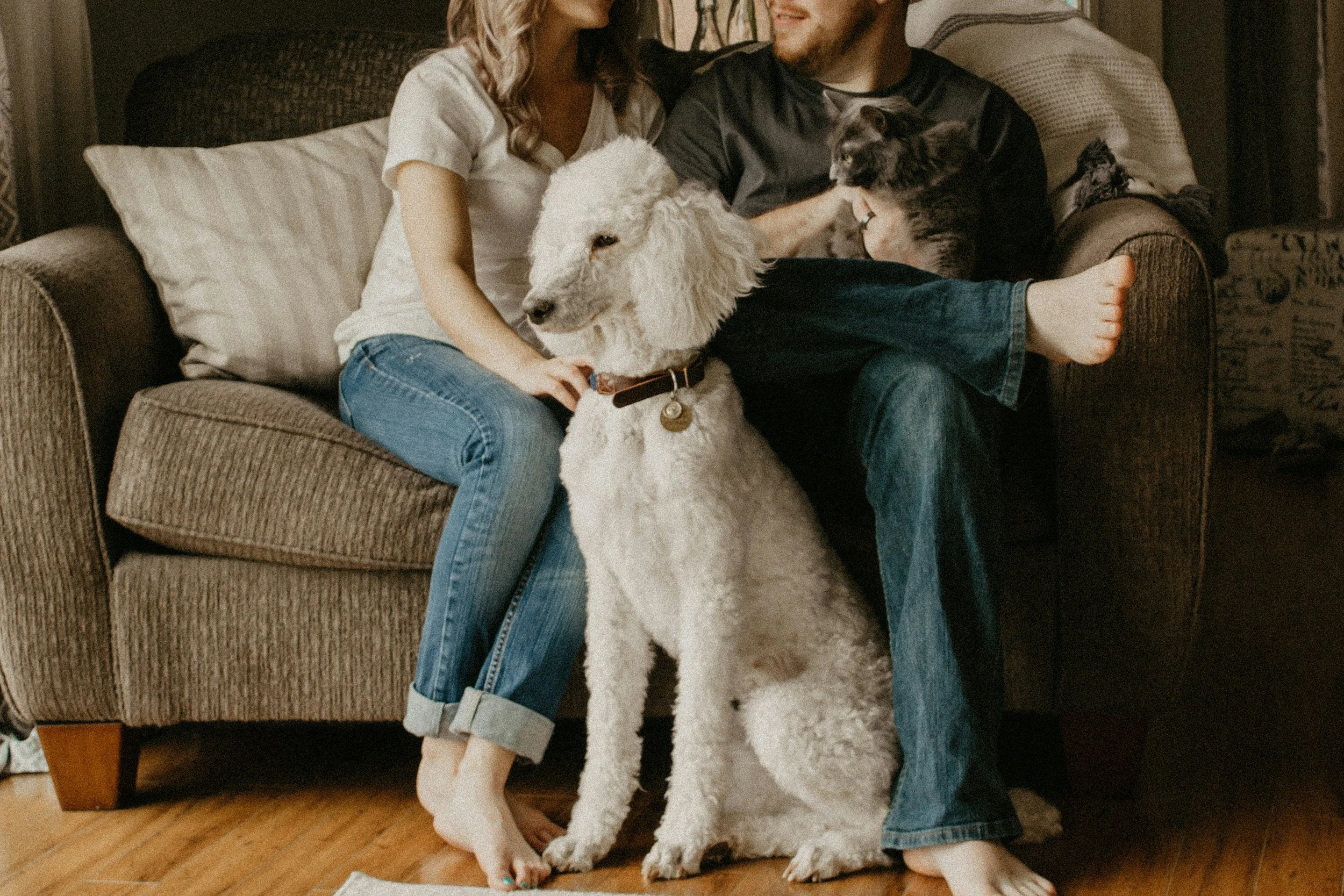
Pet Custody Mediation Australia
Because Pets Are Family Too
When a relationship ends, deciding what happens to a much-loved pet can be one of the most emotional and difficult parts of separation.
For many people, a dog, cat or other companion animal is not simply property. They are part of the family, woven into everyday routines, relationships and memories. When both people love their pet and want to remain part of their life, finding a way forward can be incredibly difficult.
Pet Custody Mediation provides a calm, structured space to work through those decisions together.
At Dannielle Young Mediation, pet custody mediation focuses not simply on who wants the pet, but on the practical arrangements that may best support the pet's ongoing care and welfare.
Mediation can help you discuss ownership, living arrangements, time with each person, veterinary care, expenses, holidays, major decisions and other issues affecting your pet's future — without immediately handing those decisions over to lawyers or a court.
Available online Australia-wide and in person at various locations where required.
Who Gets the Dog After Separation in Australia?
There is no automatic rule that determines who keeps a pet when a relationship ends.
Australian family law now contains specific provisions dealing with companion animals when separating couples are resolving property matters.
The Court can consider a range of circumstances when deciding what should happen to a companion animal, including who acquired the animal, who has cared for and paid for the animal, the relationship each person — and any children — have with the animal, each person's ability to care for the animal in the future, and any history of family violence, cruelty or threatened harm involving the pet.
A Court may ultimately make orders for one person to retain ownership of the companion animal, transfer ownership to another consenting person, or order that the animal be sold.
Importantly, however, the Court cannot order shared ownership or shared care of a companion animal.
That does not mean separating couples cannot agree to shared-care arrangements themselves.
And that is one of the areas where pet custody mediation can provide another pathway.
Read more about Pet Custody After Separation in Australia → Who Gets the Dog After Separation? Pets and Property in Family Law — Dannielle Young Mediation
What Is Pet Custody Mediation?
Pet custody mediation is a specialised form of mediation for people who have separated or are separating and need help deciding what happens to a pet they both care about.
Rather than approaching the issue simply as a dispute about ownership, mediation creates space to consider the bigger picture.
That may include:
Where your pet will live
Whether some form of shared care is appropriate
Your pet's existing bonds and attachments
Their age, breed, temperament and health
Existing routines and living arrangements
Their relationship with children or other animals
Each person's work and lifestyle commitments
Housing and future living environments
Veterinary treatment and medical needs
Day-to-day and extraordinary expenses
Holidays and travel
Handover arrangements
Registration and microchip details
Major decisions affecting your pet
What happens if circumstances change in the future
The aim is not simply to decide who "wins" the pet.
It is to help both people have a constructive conversation about what arrangements are practical, sustainable and appropriate for the animal they both love.
Can Separated Couples Share Care of a Dog?
Yes. Separating couples can voluntarily agree to shared-care arrangements for a dog or other companion animal.
However, there is an important distinction between an agreement reached privately and an order that can be made by the Family Court.
Under Australian family law, a Court cannot make an order requiring former partners to share ownership or care of a companion animal.
Through mediation, however, separating couples can explore whether a voluntarily agreed shared-care arrangement might work for them and, importantly, for their pet.
Shared care will not be appropriate in every case.
For some animals, regularly moving between homes may be manageable. For others, their age, temperament, anxiety, health, routines or attachment to a particular environment may make a different arrangement more appropriate.
That is why pet custody mediation should involve more than simply dividing the week in half.
The conversation should start with the individual animal.
What Does a Pet Custody Mediator Consider?
Every pet and every separating family is different.
There is no single arrangement that will work for every dog, cat or companion animal.
Pet custody mediation can help you consider factors such as:
Your pet's bonds and attachments
Who does your pet look to for comfort, feeding, exercise and everyday care? What relationships have developed with each person, children in the family and other animals?
Breed, age and temperament
A young, highly adaptable dog may respond very differently to moving between households than an elderly animal, an anxious dog or an animal with complex behavioural needs.
Existing routines
Where has your pet traditionally lived? Who walks, feeds, trains, grooms and cares for them? What routines are familiar and important to them?
Future living arrangements
Are both homes suitable for the animal? Is there secure outdoor space where required? Are pets permitted? Are there other animals in either household?
Work and lifestyle
Who is realistically available to provide day-to-day care? Are there long working hours, regular travel or other commitments that need to be considered?
Health and veterinary needs
Does your pet have medication, specialist veterinary treatment, dietary requirements or other ongoing health needs?
Children
What relationship does the pet have with the children of the family? Would proposed arrangements affect that relationship?
Safety and family violence
Any history of cruelty, threats involving the animal, coercive control or family violence requires careful consideration and may affect whether mediation or particular arrangements are appropriate.
The purpose is not to create a mathematical formula for deciding who should have the pet.
It is to make sure the conversation considers the actual animal at the centre of the dispute.
What Can We Agree About in Pet Custody Mediation?
Pet custody mediation can address much more than simply where your pet lives.
Depending upon your circumstances, your agreement might cover:
Ownership
Who will legally own the pet and how registration or microchip records will be dealt with.
Living arrangements
Whether your pet will primarily live with one person or spend time in both households.
Time together
If appropriate, when and how each person will spend time with the pet.
Handovers
Where handovers occur and how they will be managed.
Veterinary care
Who chooses the veterinarian, attends appointments and makes routine or emergency medical decisions.
Expenses
Food, grooming, insurance, medication, veterinary treatment, registration, boarding and other costs.
Holidays and travel
What happens when either person travels and who cares for the pet during holidays.
Major decisions
How significant medical, behavioural or welfare decisions will be approached.
Changes in circumstances
What happens if someone relocates, changes working arrangements, moves into unsuitable accommodation or can no longer care for the pet.
End-of-life decisions
How difficult decisions concerning serious illness and end-of-life care will be managed.
Thinking about these issues now can reduce the likelihood of further disagreement later.
What Is a Pet Custody Agreement?
A Pet Parenting Agreement records the arrangements you have reached about your pet following separation.
Depending on your circumstances, it can document matters such as ownership, living arrangements, shared care, expenses, veterinary treatment, holidays, communication and future decision-making.
At Dannielle Young Mediation, pet custody mediation can be used to work through these issues systematically so that both people have an opportunity to consider not only the immediate question of who keeps the pet, but how the arrangement will actually operate in everyday life.
A carefully considered agreement can provide clarity, reduce future conflict and create a practical roadmap for your pet's ongoing care.
Why Consider Pet Custody Mediation Instead of Court?
When both people want to keep a much-loved pet, it can be tempting for the dispute to quickly become positional:
"The dog is mine."
"I paid for her."
"He has always lived with me."
"I won't agree to anything other than keeping him."
Mediation creates an opportunity to move beyond those positions and explore the circumstances underneath them.
It also allows you to consider arrangements that may not be available to a Court.
A Court ultimately has to make a decision within the powers given to it by legislation. In relation to companion animals, that does not include ordering former partners to continue sharing ownership or care.
Mediation gives you greater control over the conversation and the outcome.
It can also help avoid the significant financial and emotional cost associated with escalating a dispute through lawyers and litigation.
Most importantly, mediation gives you an opportunity to make decisions about an animal you know and love, rather than asking someone who has never met your pet to make those decisions for you.
Pet Custody Mediation Across Australia
You do not need to live in Brisbane to access pet custody mediation.
Dannielle Young Mediation provides online pet custody mediation to separating couples throughout Australia.
Online mediation allows both people to participate from separate locations and can be particularly useful where former partners live in different cities or states.
In-person mediation may also be available in Brisbane and surrounding areas.
Whether you are dealing with a disagreement about a dog, cat or another companion animal, the first step is understanding whether mediation is appropriate for your circumstances.
About Your Pet Custody Mediator
Dannielle Young is an experienced Australian family lawyer, Accredited Family Law Specialist, Family Dispute Resolution Practitioner, nationally accredited mediator and Certified Pet Custody Mediator.
With almost two decades working with separating families, Dannielle understands that disputes involving pets often involve much more than legal ownership.
Pets can represent family, companionship, emotional support, routine and connection and disagreements about their future can become deeply personal.
Dannielle has undertaken specialist training in pet custody mediation, providing a framework for considering not only the legal and practical issues arising after separation, but the individual animal's relationships, routines, temperament, living environment and ongoing welfare.
Her approach is practical, compassionate and resolution-focused.
Because how you separate matters - for every member of the family.
You both love your pet. You just don't agree about what happens next.
You do not necessarily need to start with lawyers, letters or litigation.
Pet custody mediation provides an opportunity to have the conversation differently, with structure, support and a genuine focus on finding a workable way forward.
Because sometimes the hardest part of separating is deciding what happens to the family member who cannot tell you what they want.

Pet Custody Mediation FAQs
Q: Who gets the dog after separation in Australia?
There is no automatic rule that determines who keeps a dog after separation. If the dispute forms part of family law property proceedings, the Court can consider specific factors relating to a companion animal before deciding whether one person should retain ownership, ownership should be transferred to another consenting person, or the animal should be sold.
Separating couples can also negotiate their own arrangements through mediation rather than asking a Court to decide.
Q: Are pets considered property under Australian family law?
Companion animals are dealt with within the property provisions of the Family Law Act 1975, although reforms commencing in June 2025 introduced specific provisions dealing with companion animals and the factors a Court may consider when making orders about them.
Q: What is a companion animal?
“Companion animal" is the terminology used in the Family Law Act for an animal kept primarily for companionship.
"Pet custody" is the term many separating couples commonly use when searching for help about what will happen to their dog, cat or other family pet after separation.
Q: Can the Family Court order shared custody of a dog?
No. The Court cannot order separating partners to share ownership or care of a companion animal.
However, former partners may voluntarily agree to shared-care arrangements themselves, including through mediation.
Q: Can we share care of our dog after separation?
Potentially, yes.
Whether shared care is suitable depends upon the people involved and the individual dog. Factors such as temperament, age, anxiety, health, established routines, the distance between homes, relationships with children and each person's capacity to provide care should be considered.
Pet custody mediation can help you explore whether shared care is practical and appropriate in your circumstances.
Q: What if we both want to keep the dog?
This is one of the most common reasons people seek pet custody mediation.
Rather than beginning and ending with competing claims of ownership, mediation can help you examine the history of care, your dog's relationships and routines, each person's circumstances and the realistic options available for the future.
Q: Do we need lawyers for pet custody mediation?
Not necessarily.
Whether you should obtain independent legal advice will depend upon your circumstances, particularly where ownership of the pet forms part of a broader family law property dispute.
As mediator, Dannielle remains independent and does not provide either participant with individual legal advice during the mediation.
Q: Can we make a Pet Parenting or Pet Custody Agreement?
Yes. If you reach agreement through mediation, arrangements concerning your pet can be recorded in a Pet Parenting Agreement.
The agreement can address issues such as ownership, living arrangements, shared care, expenses, veterinary treatment, holidays and future decisions.
The appropriate legal status and documentation of any agreement will depend upon your individual circumstances, and independent legal advice may be appropriate.
Q: Can pet custody mediation happen online?
Yes.
Dannielle Young Mediation offers online pet custody mediation Australia-wide. Each person can participate from a separate location, meaning you do not need to live in the same city — or even the same state — to mediate.
Q: What if my former partner refuses to mediate?
Mediation is a voluntary process and another person cannot simply be forced to reach an agreement.
However, an invitation to mediation can be sent to the other person explaining the process and providing them with an opportunity to participate.
If mediation does not proceed or no agreement can be reached, you may wish to obtain independent legal advice about the options available to you.
Q: How long does mediation take?
The length of mediation depends on the complexity of the issues being discussed and the willingness of the parties to engage in the process. Some matters may be resolved in a single session, while others may require multiple sessions to work through more complex parenting or property issues. Most matters move from first contact to mediation within 1–3 weeks (depending on both parties’ availability and readiness).

Ready to Begin?
Ready to Begin?
Start with a no-obligation 15-minute call to understand your options and next steps.